Anxiety and Jaw Pain
28th Mar 2026

Feeling anxious can do more than make your heart race, it can also make your jaw hurt. When we’re stressed, our bodies often respond by tensing muscles, especially in the jaw. This can lead to clenching, teeth grinding, and soreness that’s hard to ignore.
If you’ve noticed jaw pain during stressful times, you’re not alone. Anxiety-related jaw pain is common, and the good news is, there are simple ways to relieve it and protect your teeth.
Can Anxiety Cause Jaw Pain?

Yes. Anxiety can trigger jaw pain because it puts your body in a constant “fight or flight” mode.
A 2024 review highlights stress as the most widely accepted factor in bruxism (teeth grinding or clenching), explaining how chronic stress increases muscle tone and disrupts neural pathways regulating involuntary jaw muscle movement
A 2020 systematic review found that individuals under stress are more than twice as likely (odds ratio ~2.07) to have bruxism compared to those who aren’t stressed
Note: This response tightens your muscles, including the ones in your jaw. Over time, that tension can lead to clenching or grinding your teeth (also called bruxism), even when you’re not aware of it.
Common Symptoms of Anxiety-Related Jaw Pain
Jaw pain from anxiety can feel different for everyone, but some signs are more common:
Aching or tight jaw muscles — often worse after waking up or during stressful moments.
Clicking or popping sounds when opening or closing your mouth.
Headaches or earaches that seem connected to jaw tension.
Facial soreness or tenderness along the cheeks and temples.
Morning stiffness from clenching or grinding at night.
Note: These symptoms may come and go, but if they keep happening, it’s worth finding the cause so you can treat it early.
Related Articles:
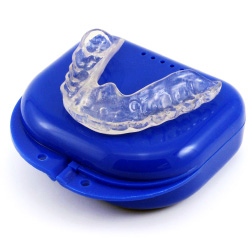
- Most Popular
- Hard Outside, Soft Inside
- 2MM Thick
- Moderate / Heavy
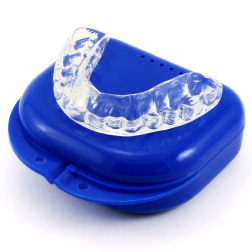
- Most Durable
- Hard Materials
- 1.5MM Thick
- Heavy / Severe
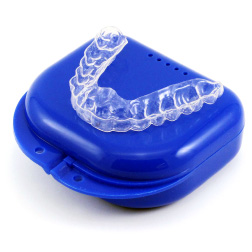
- For Day Time Use
- Thin, Barely Visible
- 1MM Thick
- Light / Moderate
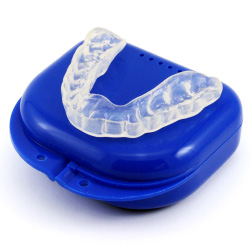
- For Clenching
- Flexible & Soft
- 1.5MM Thick
- Light / Moderate
Possible Causes and Contributing Factors
Anxiety-related jaw pain can happen for different reasons, and a few habits or conditions can make it worse:
Daytime Clenching
Unconsciously holding your jaw tight when stressed, anxious, or deeply focused on tasks.
Nighttime Grinding (Bruxism)
Grinding or clenching your teeth while sleeping, often linked to stress, and potentially wearing down teeth over time.
TMJ Disorders
Anxiety can trigger or worsen problems with the temporomandibular joint, leading to pain, clicking, or difficulty moving the jaw.
Poor Posture
Slouching or hunching, especially during long hours at a desk—can strain neck and jaw muscles, contributing to discomfort.
Chewing Habits
Frequently chewing gum, biting nails, or eating very hard foods can add extra stress to jaw muscles and joints.
Note: Understanding what’s causing your pain is the first step to finding the right solution.
Self-Care and Home Remedies for Jaw Pain Relief
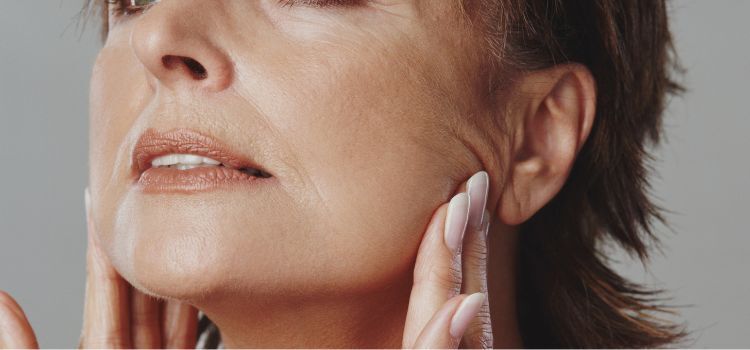
You can often ease anxiety-related jaw pain with simple steps at home. These small changes can make a big difference in comfort and recovery:
Jaw Stretches and Gentle Massage
Helps relax tight muscles and improve jaw movement.
Warm Compress
Apply heat to the sides of your face to ease tension and discomfort.
Stress Management
Practice deep breathing, meditation, or light exercise to calm your body and mind.
Watch Your Posture
Keep your head and shoulders aligned, especially when working at a desk or looking at screens.
Avoid Hard or Chewy Foods
Choose softer meals to reduce strain on your jaw while it recovers.
Note: These habits can bring relief, but they work best when paired with strategies to address the root cause of anxiety and protect your teeth from grinding or clenching.
Related Articles:
When to See a Doctor or Dentist
Jaw pain from anxiety often improves with self-care, but sometimes it’s a sign of something more serious. It’s best to get professional help if you notice:
- Pain that lasts more than a week or keeps getting worse.
- Difficulty opening or closing your mouth fully.
- Jaw locking or feeling stuck in one position.
- Persistent headaches, earaches, or facial pain.
- Clicking or popping sounds that are new or more frequent.
Note: A doctor or dentist can check for TMJ disorders, dental problems, or other conditions, and guide you toward the right treatment.
Frequently Asked Questions
1. How do I know if my jaw pain is from anxiety or TMJ disorder?
Jaw pain from anxiety usually comes with stress or tension and may improve with relaxation. TMJ disorder often includes jaw locking, limited movement, or clicking sounds. A dentist can confirm the cause.
2. Can jaw pain from anxiety go away on its own?
Sometimes, yes, especially if you reduce stress and avoid clenching or grinding. But if pain lasts more than a week, see a dentist or doctor.
3. What’s the best way to stop grinding my teeth from anxiety?
Managing stress is key. A custom night guard can also protect your teeth and reduce jaw strain while you work on long-term anxiety relief.
4. Should I see a dentist or doctor for anxiety-related jaw pain?
Start with a dentist if you suspect grinding or TMJ issues. If anxiety is the main trigger, a doctor or therapist can help with stress management.
Final Thoughts
Jaw pain from anxiety is common, but it doesn’t have to be something you live with. By understanding the link between stress and your jaw, making small daily changes, and using the right tools, you can protect your teeth and feel more comfortable.
If grinding or clenching is part of the problem, a custom-fit night guard from Pro Teeth Guard can help relieve pressure and prevent damage, so you can sleep better and wake up pain-free.
References:
- Lukic, N., Saxer, T., Hou, M.-Y., Zumbrunn Wojczyńska, A., Gallo, L. M., & Colombo, V. (2021). Short-term effects of NTI-TSS and Michigan splint on nocturnal jaw muscle activity: A pilot study. Clinical and Experimental Dental Research, 7(3), 323–330. https://doi.org/10.1002/cre2.371
- Pavlou, I. A., Kouvelas-Pavlou, V., Zygkou, V., & Stavrianos, D. A. (2024). Neurobiology of bruxism: The impact of stress (Review). Biomedical Reports, 59. https://doi.org/10.3892/br.2024.1747
- Most Popular
- Hard Outside, Soft Inside
- 2MM Thick
- Moderate / Heavy
- Most Durable
- Hard Materials
- 1.5MM Thick
- Heavy / Severe
- For Day Time Use
- Thin, Barely Visible
- 1MM Thick
- Light / Moderate
- For Clenching
- Flexible & Soft
- 1.5MM Thick
- Light / Moderate