Can Grinding Your Teeth Cause Bone Loss?
1st Feb 2026
Noticing jaw soreness, tooth sensitivity, or slight looseness can be concerning. If you grind your teeth, you may wonder if it can lead to bone loss. Grinding puts significant pressure on the teeth and jaw, so the concern is understandable.
This guide explains how grinding affects the bone around your teeth, the signs to watch for, and how to protect your smile.
Can Grinding Your Teeth Really Cause Bone Loss?
Grinding does not usually cause bone loss on its own. The most common cause of bone loss around teeth is gum disease, also known as periodontitis.
A review on bone loss in gum disease explains that when the gums are infected, bacteria and inflammation work together to break down the bone that supports the teeth.
One study found that periodontal disease can lead to irreversible bone loss around the teeth and may eventually cause tooth loss.
Another recent article explains that certain inflammatory cells involved in gum disease can also break down the bone around the teeth.
There is some research linking bruxism (teeth grinding) to periodontal/pdl effects, though the connection to bone loss is less clear:
A recent study that examined bone structure in people who grind their teeth found early signs that bruxism may be linked to subtle bone changes.
There is also research showing the opposite. One review concluded that bruxism is not strongly linked to bone loss or damage to the tissues that support the teeth.
Note: So while grinding may contribute under certain conditions (e.g., existing gum disease, trauma to ligaments), the evidence is not definitive that grinding alone will cause bone loss.
Related Articles:
- Gum Pain In The Back Of Mouth
- Teeth Feel Weird? 5 Common Issues
- Does Teeth Grinding Cause Gum Recession?
How Grinding Affects the Bone Around Your Teeth
Bruxism places pressure on the teeth, jaw, and surrounding tissues. Over time, this repeated stress can affect the structures that hold your teeth in place.
Excessive Force on the Ligaments
Each tooth is supported by a small but strong tissue called the periodontal ligament. Grinding puts heavy pressure on this ligament, and over time it can become strained and inflamed. This may cause temporary looseness and place extra stress on the bone around the tooth.
Inflammation and Tissue Breakdown
Inflammation is the body's response to stress or injury. When grinding causes repeated small injuries, the gums and nearby tissues can stay inflamed. If this continues, the tissues may break down and eventually affect the bone that supports the teeth.
Acceleration of Existing Bone Loss
This is the most common concern. Grinding usually damages bone faster when there is already another issue present, such as:
- Early or moderate gum disease
- Receding gums
- Misaligned teeth
- Previous injuries
- Missing teeth that shift pressure to fewer points
Note: When the bone is already compromised, grinding becomes a force multiplier that speeds up bone changes.
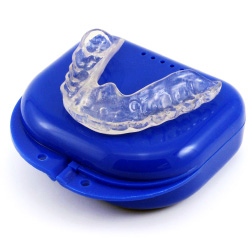
- Most Popular
- Hard Outside, Soft Inside
- 2MM Thick
- Moderate / Heavy
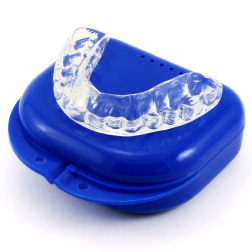
- Most Durable
- Hard Materials
- 1.5MM Thick
- Heavy / Severe
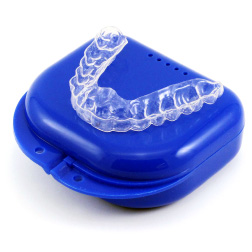
- For Day Time Use
- Thin, Barely Visible
- 1MM Thick
- Light / Moderate
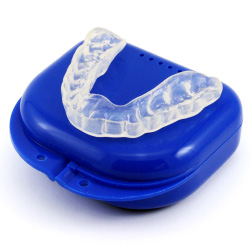
- For Clenching
- Flexible & Soft
- 1.5MM Thick
- Light / Moderate
Signs That Grinding May Be Affecting Your Jawbone or Teeth
Grinding can be silent, especially at night, so it helps to know the warning signs. If you notice any of these changes, bruxism may be affecting your teeth or the bone underneath:
- Teeth feel loose or slightly mobile
- Your bite feels different when you wake up
- Morning jaw pain or stiffness
- Sensitivity around the gums
- Gum recession
- Flattened or worn down teeth
- Clicking or popping in the jaw
- Frequent morning headaches
- Cracks, chips, or fractures
Note: These symptoms do not always mean bone loss is happening, but they can be early red flags that the supporting structures of your teeth are under stress.
Risk Factors That Increase the Chance of Bone Loss from Grinding
Some conditions make your teeth more vulnerable to bone changes when you grind. These include:
Gum Disease (Periodontitis)
The leading cause of bone loss. The American Dental Association notes that untreated gum disease slowly breaks down the bone that supports teeth. Grinding adds force that can speed up this process.
Severe Nighttime Clenching
Nighttime grinding can generate up to 200 to 300 pounds of pressure. This is far stronger than normal chewing.
Misalignment or Missing Teeth
If your bite is uneven, certain teeth take on more pressure. This can strain the bone under those teeth.
Age and Lower Bone Density
Older adults or those with osteoporosis may experience faster structural changes.
Sleep Apnea or High Stress
Both conditions are strongly linked to severe nighttime grinding.
Related Articles:
Can Bone Loss from Grinding Be Reversed?
Bone loss does not grow back on its own. However, dentists can often stop or slow down its progression with treatment. Early intervention can make a significant difference.
Here are the most common ways bone health is restored or stabilized:
- Deep cleaning or periodontal therapy to reduce inflammation
- Bite adjustments to distribute pressure evenly
- Orthodontic treatment if misalignment is significant
- Custom night guards to reduce pressure
- Bone grafting in advanced cases
Pro tip: The key is getting an evaluation early. The sooner the underlying cause is treated, the more bone can be preserved.
What Happens in a Healthy Mouth vs a Diseased Mouth
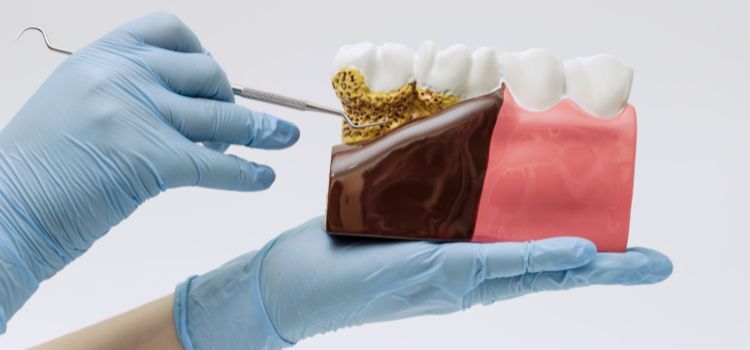
In a Healthy Mouth
If your gums are healthy and free from inflammation:
- Grinding does not cause bone loss
- The jawbone may adapt by becoming denser
- The periodontal ligament may widen
- Teeth may feel loose, but bone remains intact
This looseness is usually reversible once grinding pressure is reduced.
In a Mouth With Gum Disease
If plaque, inflammation, or periodontitis is already present:
- Grinding acts as a force multiplier
- Inflammation penetrates deeper into supporting bone
- Bone loss progresses faster
- Teeth become increasingly unstable
This is where grinding becomes clinically significant.
Frequently Asked Questions
1. Can grinding cause permanent bone loss?
Grinding can contribute to bone loss, especially if gum disease is already present. Once bone is lost, it does not grow back on its own, but dentists can slow or manage the problem with treatment.
2. Can bone grow back after loss?
Bone does not naturally grow back. However, treatments like bone grafting and periodontal therapy can help rebuild or strengthen the support around teeth.
3. Can grinding make teeth loose?
Yes. Grinding puts strong pressure on the teeth and the ligament that holds them in place. This can make teeth feel loose temporarily or, in some cases, long term.
4. Will a night guard stop bone loss?
A night guard reduces pressure from grinding and helps protect the bone and gums. It cannot reverse bone loss, but it can help prevent more damage.
5. How do dentists check for bone loss?
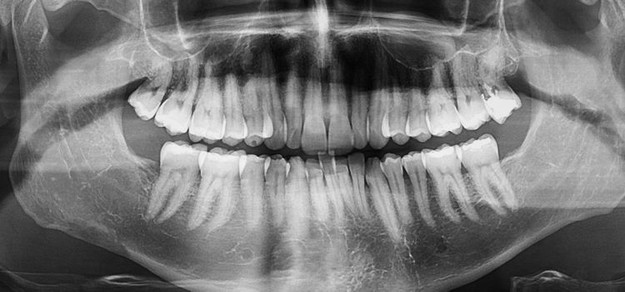
Dentists use X-rays to check the height and condition of the bone around your teeth. They also measure gum pockets to see how well the tissues are supporting each tooth.
Conclusion
Grinding can put extra stress on the teeth and jaw, and while it does not always cause bone loss on its own, it can make existing problems worse. With early care and the right protection, you can keep your teeth stable and healthy.
A custom-fit night guard is one of the best ways to protect your smile. Check out our custom night guard options to reduce grinding pressure and keep your teeth strong.
References:
- Hienz, S. A., Paliwal, S., & Ivanovski, S. (2015). Mechanisms of bone resorption in periodontitis. Journal of Immunology Research, 2015, Article 615486. https://doi.org/10.1155/2015/615486
- Zubery, Y., Dunstan, C. R., Story, B. M., Kesavalu, L., Ebersole, J. L., Holt, S. C., & Boyce, B. F. (1998). Bone resorption caused by three periodontal pathogens in vivo in mice is mediated in part by prostaglandin. Infection and Immunity, 66(9), 4158-4162. https://doi.org/10.1128/IAI.66.9.4158-4162
- Zhang, M., Liu, Y., Afzali, H., & Graves, D. T. (2024). An update on periodontal inflammation and bone loss. Frontiers in Immunology, 15, Article 1385436. https://doi.org/10.3389/fimmu.2024.1385436
- Saricam, E., & Tayman, M. A. (2025). Bruxism assessment combining fractal analysis, clinical evaluation, and self-reports: A case-control study. BMC Oral Health, 25, Article 851. https://doi.org/10.1186/s12903-025-06234-5
- Manfredini, D., Ahlberg, J., Mura, R., & Lobbezoo, F. (2015). Bruxism is unlikely to cause damage to the periodontium: Findings from a systematic literature assessment. Journal of Periodontology, 86(4), 546-555. https://doi.org/10.1902/jop.2014.140539
- American Dental Association. (2022, June 9). Periodontitis. Retrieved from https://www.ada.org/resources/ada-library/oral-health-topics/periodontitis
- Johns Hopkins Medicine. (n.d.). Bruxism. Retrieved from https://www.hopkinsmedicine.org/health/conditions-and-diseases/bruxism
- Most Popular
- Hard Outside, Soft Inside
- 2MM Thick
- Moderate / Heavy
- Most Durable
- Hard Materials
- 1.5MM Thick
- Heavy / Severe
- For Day Time Use
- Thin, Barely Visible
- 1MM Thick
- Light / Moderate
- For Clenching
- Flexible & Soft
- 1.5MM Thick
- Light / Moderate