Can Nail Biting Lead to Bruxism?
13th Jun 2026
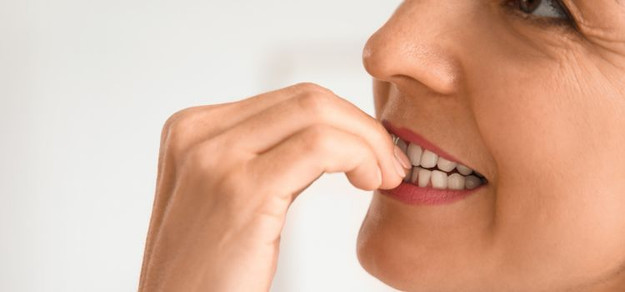
Nail biting is a common habit, especially during stress or anxiety. Bruxism is a condition where you grind or clench your teeth, often without realizing it. Many people wonder if these two are connected.
In this article, we explain whether nail biting can contribute to bruxism, how it may affect your jaw and teeth, and what simple steps you can take to protect your smile.
Can Nail Biting Contribute to Bruxism?
Nail biting doesn’t “cause” bruxism in a proven, direct way. But research suggests the two can show up together, especially in children and teens, and they may share the same triggers.
In dental studies, nail biting and bruxism are often grouped as “oral parafunctional habits” (habits that use the teeth/jaw in ways not meant for eating or speaking). In one study on children, nail biting was the most common oral habit reported among kids with bruxism, which supports a possible link.
Other research also finds that biting-type habits (like lip or object biting) and poor sleep quality are linked with higher chances of sleep bruxism, suggesting that daytime oral habits can be part of the bigger pattern.
Note: What this likely means in real life: nail biting may increase jaw muscle tension and keep the jaw “on alert,” which can make clenching more likely in some people. Stress and anxiety can also drive both habits, which may explain why they often overlap.
Related Articles:
- Teeth Drumming vs Teeth Grinding
- How To Stop Cheek Biting
- Does Chewing Gum Help with Teeth Grinding?
Nail Biting vs Bruxism: What’s the Difference?
Nail biting and bruxism are not the same thing.
Nail biting is a daytime habit where you chew or bite your nails, often without noticing. It is usually linked to stress, boredom, or anxiety.
Bruxism means grinding or clenching your teeth. It can happen during the day, but it often occurs at night while you are asleep.
Note: Even though they are different, they use the same jaw muscles. This is why people who bite their nails may also notice jaw tension, clenching, or other bruxism symptoms.
Signs Nail Biting May Be Affecting Your Jaw or Teeth
If nail biting is adding strain to your jaw, you may notice symptoms similar to bruxism. These signs can show up slowly and are easy to miss at first.
Common signs include:
Jaw soreness or tightness, especially at the end of the day
Morning headaches or facial pain
Tooth sensitivity to hot or cold
Teeth that look worn, flat, or chipped
Clicking, popping, or fatigue in the jaw when chewing
Note: If you notice several of these at the same time, it may mean your jaw muscles are overworking and your teeth are under extra stress.
Will Stopping Nail Biting Reduce Bruxism?
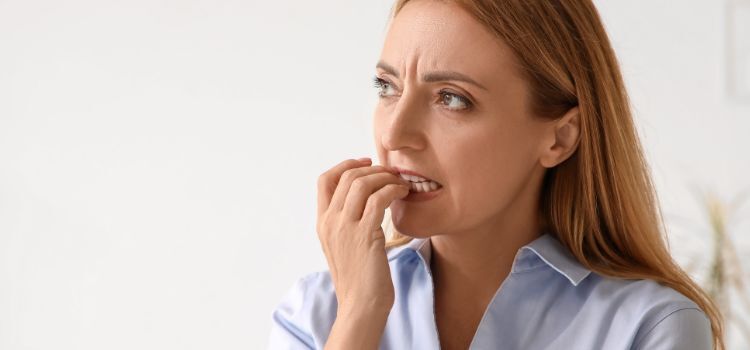
Stopping nail biting can help, but it may not fully stop bruxism.
If your jaw tension comes mostly from daytime habits or stress, breaking the nail biting habit can reduce muscle strain and clenching during the day. For some people, this also lessens jaw tightness at night.
However, sleep bruxism often continues even after nail biting stops. This is because nighttime grinding is linked to the nervous system, sleep quality, and stress levels, not just habits.
Note: That’s why many dentists recommend protecting your teeth at night while you work on reducing nail biting and managing stress.
What to Do If You Bite Your Nails and Think You Clench or Grind
If you have both habits, the goal is to reduce jaw strain during the day and protect your teeth at night.
Break the Nail Biting Habit During the Day
Keep your nails short so there is less to bite. Bitter-tasting nail polish can help make you more aware of the habit. Using a fidget or stress ball can give your hands something else to do. Caring for your cuticles can also reduce picking and biting.
Relax Your Jaw Muscles
Aim for a relaxed jaw position with your lips together and your teeth slightly apart. Let your jaw drop when you notice tension. Rest your tongue gently on the roof of your mouth instead of pressing your teeth together.
Reduce Stress Triggers
Take short breathing breaks during the day to release tension. A steady sleep routine can lower nighttime clenching. Reducing caffeine later in the day may also help keep your jaw more relaxed.
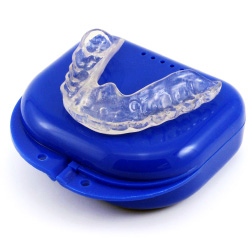
- Most Popular
- Hard Outside, Soft Inside
- 2MM Thick
- Moderate / Heavy
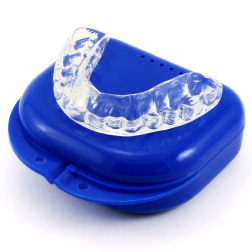
- Most Durable
- Hard Materials
- 1.5MM Thick
- Heavy / Severe
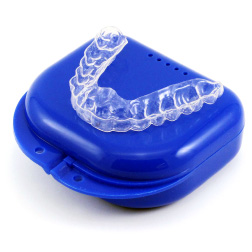
- For Day Time Use
- Thin, Barely Visible
- 1MM Thick
- Light / Moderate
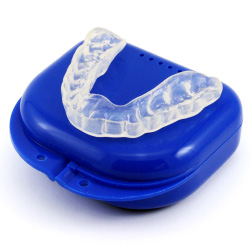
- For Clenching
- Flexible & Soft
- 1.5MM Thick
- Light / Moderate
How a Night Guard Helps Protect Your Teeth
If you clench or grind while you sleep, a night guard can help protect your teeth from damage. It creates a barrier that reduces wear, cracking, and pressure on the jaw.
A night guard does not stop stress or habits like nail biting. Its role is protection. This is important because sleep bruxism often continues even when daytime habits improve.
Custom-fit night guards are designed to fit your teeth properly, making them more comfortable and easier to wear through the night. This can help protect your smile while you work on reducing jaw tension and stress during the day.
Related Articles:
When to See a Dentist or Doctor
You should talk to a dentist if you notice tooth damage, ongoing jaw pain, or signs of grinding. Dentists can check for wear, jaw strain, and bite issues, and recommend ways to protect your teeth.
See a doctor if clenching or grinding is linked to poor sleep, loud nighttime grinding, or frequent headaches. Ongoing stress, anxiety, or sleep problems can also play a role and may need medical support.
Note: Getting help early can prevent more serious tooth and jaw problems over time.
Frequently Asked Questions
Is nail biting a type of bruxism?
No. Nail biting is a daytime habit. Bruxism is teeth clenching or grinding, which can happen during the day or during sleep.
Can nail biting lead to nighttime teeth grinding?
It can be linked, but it does not prove the cause. Nail biting may increase jaw tension and may happen alongside bruxism, especially when stress is a trigger.
Does stress cause both nail biting and bruxism?
Stress is a common trigger for both. Many people bite their nails or clench their teeth more when they feel anxious, tense, or overwhelmed.
Will a night guard stop nail biting?
No. A night guard is mainly for sleep and is used to protect teeth from grinding or clenching at night. It does not treat daytime habits like nail biting.
Can kids have both nail biting and bruxism?
Yes. Both habits are common in children, and they can happen together. If you notice tooth wear, jaw pain, or headaches, it’s worth asking a dentist to check.
Conclusion
Nail biting and bruxism are different, but they often share the same triggers, such as stress and jaw tension. Nail biting may add extra strain to the jaw and make clenching more likely, but it does not directly cause bruxism in everyone.
If you notice jaw pain, worn teeth, or signs of grinding, it helps to address daytime habits and protect your teeth at night. A properly fitted night guard can help prevent damage while you work on reducing stress and jaw tension.
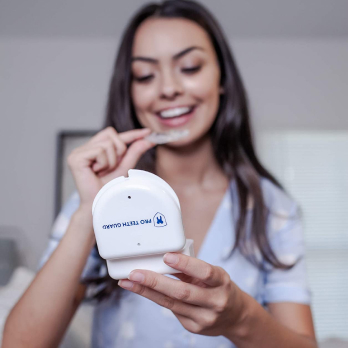
Protect your teeth from grinding and clenching while you work on stress and habits. A custom-fit night guard from Pro Teeth Guard is designed for comfort, fit, and everyday use, helping protect your smile from damage caused by bruxism.
References:
- Seraj, B., Shahrabi, M., Ghadimi, S., Ahmadi, R., Nikfarjam, J., Zayeri, F., Pour Taghi, F., & Zare, H. (2010). The prevalence of bruxism and correlated factors in children referred to dental schools of Tehran, based on parent’s report. Iranian Journal of Pediatrics, 20(2), 174–180. https://www.ncbi.nlm.nih.gov/pmc/articles/PMC3446016/
- Soares, J. P., Giacomin, A., Cardoso, M., Serra-Negra, J. M., Bolan, M., & others. (2020). Association of gender, oral habits, and poor sleep quality with possible sleep bruxism in schoolchildren. Brazilian Oral Research, 34, e019. https://doi.org/10.1590/1807-3107bor-2020.vol34.0019
- Almutairi, A. F., Albesher, N., Aljohani, M., Alsinanni, M., Turkistani, O., & Salam, M. (2021). Association of oral parafunctional habits with anxiety and the Big-Five Personality Traits in the Saudi adult population. Saudi Dental Journal, 33(2), 90–98. https://doi.org/10.1016/j.sdentj.2020.01.003
- Most Popular
- Hard Outside, Soft Inside
- 2MM Thick
- Moderate / Heavy
- Most Durable
- Hard Materials
- 1.5MM Thick
- Heavy / Severe
- For Day Time Use
- Thin, Barely Visible
- 1MM Thick
- Light / Moderate
- For Clenching
- Flexible & Soft
- 1.5MM Thick
- Light / Moderate