Essential Oils for Teeth Grinding (Bruxism)
15th May 2026

Teeth grinding can cause jaw pain, morning headaches, and tooth sensitivity. A partner may hear grinding at night, or a dentist may notice tooth wear.
If you searched for essential oils for teeth grinding, you want a natural way to reduce clenching. Essential oils may help with relaxation and jaw tension, but they don’t stop bruxism or protect teeth from damage.
This guide covers the best oils to try, safe ways to use them, what to avoid, and when a night guard is the better option.
Quick Answer: Can Essential Oils Stop Teeth Grinding?
Not usually.
Essential oils may help you feel calmer before bed and reduce jaw tension. That can make symptoms feel better for some people. But they do not reliably stop bruxism, and they do not protect your teeth from wear, chips, or cracks.
What Essential Oils Can Help With:
Bedtime relaxation and anxiety symptoms
Lavender has human research behind it for reducing anxiety symptoms, with the strongest evidence in some studies coming from oral lavender preparations rather than inhalation (which has mixed results).
Sleep quality (as part of a wind-down routine)
Systematic reviews of randomized trials suggest lavender aromatherapy may improve sleep quality for some adults, though results vary by study and population.
Jaw tension and discomfort (symptom support)
If your grinding is linked to stress or muscle tightness, relaxation (including aromatherapy + gentle jaw massage) may help you feel less tense—but this is symptom support, not a fix for the grinding itself.
What They Can’t Do:
Reliably stop sleep bruxism
Relaxation and sleep-hygiene approaches are often suggested, but evidence shows they don’t consistently reduce the actual bruxism muscle activity for many people.
Protect teeth from wear, chips, or cracks
Even if oils help you feel calmer, they don’t create a physical barrier between your teeth. For people who grind often, occlusal appliances (night guards) are a standard option used to protect teeth and reduce symptoms.
Pro Tip: If you grind often, the most effective way to protect your teeth while you work on triggers is a Custom-fit night guard.
Best Essential Oils To Try For Teeth Grinding Support
Lavender (Relaxation + Sleep Support)
Lavender may help you feel calmer at night and sleep better. A review of 20 randomized trials found many studies reported improved sleep quality with lavender essential oil, but results weren’t the same for everyone.
Chamomile (Calming Bedtime Support)
Chamomile is used to help you wind down. A randomized controlled trial studied chamomile oil inhalation for insomnia and reported improved sleep outcomes.
Marjoram (Stress Support In Bruxism Research)
Marjoram has some bruxism-specific research. A study in people with bruxism found marjoram oil inhalation during neurofeedback training was linked with lower stress scores.
Marjoram, Vetiver, And Lavender With Massage (Early Bruxism Evidence)
A 2024 study looked at these oils plus massage in bruxism patients and measured masseter muscle changes with ultrasound, along with symptom surveys. This is early evidence, but it’s directly related to bruxism.
Peppermint (For Tension Headaches From Clenching)
Peppermint doesn’t treat bruxism, but it may help if clenching triggers tension-type headaches. Controlled studies have found topical peppermint oil can work better than placebo for tension-type headache pain.
How To Use Essential Oils Safely For Jaw Clenching Or Grinding

Start With The Safest Options
Use essential oils by diffusing them or by skin application only after dilution.
Do Not Swallow Essential Oils
Do not take essential oils by mouth. Do not add them to water to “drink.”
Always Dilute Before Skin Use
If you apply oils to your jaw area, mix them with a carrier oil first. Start low and patch test.
Use A Diffuser Before Bed
Diffuse for a short time as part of your wind-down routine. Follow your diffuser instructions and keep the room ventilated.
Try A Gentle Jaw Massage
Massage the jaw muscles on the outside of your face using a diluted blend. Keep oils away from your eyes, lips, and inside your mouth. Wash your hands after.
Be Careful With Peppermint
Peppermint can feel strong and may irritate skin. Avoid using it on children.
Stop If You Feel Irritation
Stop if you get burning, redness, rash, headache, or nausea. If someone swallows an essential oil, seek urgent medical advice.
Why People Grind Their Teeth at Night (Bruxism Basics)
What “Sleep Bruxism” Is
Sleep bruxism is jaw-muscle activity during sleep that can involve clenching, grinding, or both. It can lead to tooth wear and jaw pain over time.
Common Triggers (What Research Shows)
Stress, anxiety, and mental load
Many studies link higher stress/anxiety with bruxism, though results vary and it’s not always a simple cause-and-effect.
Sleep disruption and breathing issues (like sleep apnea)
Research shows bruxism is often seen in people with obstructive sleep apnea (OSA), suggesting a possible connection through arousals/fragmented sleep.
Caffeine, alcohol, smoking, and other substances
Lifestyle factors like caffeine and alcohol are commonly listed as risk factors for bruxism, and reducing them may help some people.
Certain medications (especially some antidepressants)
Systematic reviews report an association between SSRI/SNRI antidepressants and bruxism in some patients (often starting within weeks of starting or changing a dose).
Signs You May Be Grinding (What People Notice)
Morning symptoms
- Jaw tightness or soreness
- Temple headaches
- Facial fatigue
Tooth and mouth signs
- Tooth sensitivity
- Flattened edges, chips, cracks
- Worn dental work
Jaw/TMJ signs
- Clicking/popping with discomfort
- Limited opening or “locking” sensations
Note: If these are frequent, a dentist can check for wear patterns and discuss protection + likely triggers.
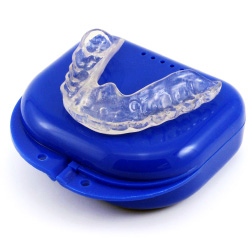
- Most Popular
- Hard Outside, Soft Inside
- 2MM Thick
- Moderate / Heavy
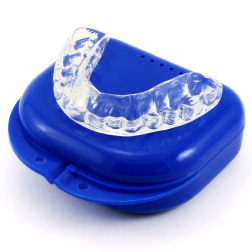
- Most Durable
- Hard Materials
- 1.5MM Thick
- Heavy / Severe
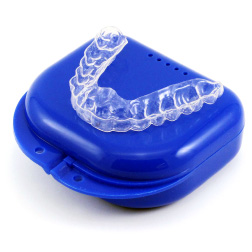
- For Day Time Use
- Thin, Barely Visible
- 1MM Thick
- Light / Moderate
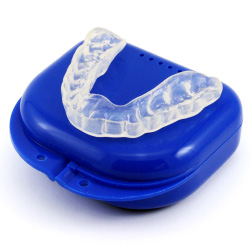
- For Clenching
- Flexible & Soft
- 1.5MM Thick
- Light / Moderate
More Effective Ways To Reduce Teeth Grinding (Alongside Oils)
Protect Your Teeth With A Night Guard
Essential oils can help you relax, but they don’t stop tooth-on-tooth contact. A night guard creates a barrier that helps protect your teeth from wear, chips, and cracks.
Lower Common Triggers
Try small changes that reduce clenching risk at night: cut caffeine later in the day, limit alcohol close to bedtime, and build a short wind-down routine.
Do A Quick Jaw Relaxation Routine
Use a warm compress on your jaw for a few minutes, then do gentle jaw stretches. During the day, check in with your mouth: lips together, teeth apart, tongue resting on the roof of your mouth.
Talk To A Dentist If It’s Ongoing
If you wake up with jaw pain, headaches, or you notice tooth wear, a dentist can confirm signs of grinding and recommend the right protection.
Related Articles:
FAQs:
What Is The Best Essential Oil For Teeth Grinding?
Lavender is the most common choice because it may support relaxation and sleep. Chamomile is another gentle option. These oils may help with stress and jaw tension, but they won’t stop bruxism.
Can Essential Oils Stop Teeth Grinding?
Not reliably. Essential oils may help you feel calmer and reduce muscle tension, but they don’t prevent tooth-on-tooth grinding or protect your teeth from damage.
How Do I Use Essential Oils For Jaw Clenching At Night?
The safest options are diffusing before bed or using a diluted oil for a gentle jaw massage on the outside of your face. Do not put oils inside your mouth.
Can I Put Essential Oils On My Teeth Or Gums?
No. Avoid applying essential oils directly to teeth, gums, or the inside of your mouth. They can irritate tissues and are not a safe treatment for grinding.
How Long Does It Take For Essential Oils To Help?
If they help, you may notice a calming effect the same night. For ongoing tension, it may take a week or two of a consistent bedtime routine to notice a difference.
Are Essential Oils Safe For Kids Who Grind Their Teeth?
Be cautious. Kids are more sensitive to essential oils, and some oils (like peppermint) are not recommended. Talk to a pediatrician or dentist before using oils on children.
Conclusion:
Essential oils may help you feel calmer at night and ease jaw tension. But they don’t stop teeth grinding or protect your teeth from damage.
If you grind often, the best next step is to protect your teeth with a night guard and work on your triggers at the same time. If you’re waking up with jaw pain, headaches, or tooth sensitivity, talk to a dentist so you can prevent bigger problems later.
Want an easy way to protect your teeth tonight? Get a custom-fit nightguard from Pro Teeth Guard and wake up with less worry.
References:
- Lal, S. J., Sankari, A., & Weber, K. K. (2025). Bruxism management. In StatPearls [Internet]. StatPearls Publishing. Retrieved December 31, 2025, from https://www.ncbi.nlm.nih.gov/books/NBK482466/
- Mesko, M. E., Hutton, B., Skupien, J. A., Sarkis-Onofre, R., Moher, D., & Pereira-Cenci, T. (2017). Therapies for bruxism: A systematic review and network meta-analysis (protocol). Systematic Reviews, 6(1), Article 4. https://doi.org/10.1186/s13643-016-0397-z
- Shen, H., Zhang, L.-J., & Zhu, W.-Y. (2025). The sleep-enhancing effect of lavender essential oil in adults: A systematic review and meta-analysis. Holistic Nursing Practice. https://doi.org/10.1097/HNP.0000000000000734
- Donelli, D., Antonelli, M., Bellinazzi, C., Gensini, G. F., & Firenzuoli, F. (2019). Effects of lavender on anxiety: A systematic review and meta-analysis. Phytomedicine, 65, 153099. https://doi.org/10.1016/j.phymed.2019.153099
- Saczuk, K., Lapinska, B., Wilmont, P., Pawlak, L., & Lukomska-Szymanska, M. (2019). Relationship between sleep bruxism, perceived stress, and coping strategies. International Journal of Environmental Research and Public Health, 16(17), 3193. https://doi.org/10.3390/ijerph16173193
- Chemelo, V. d. S., de Sousa Né, Y. G., Frazão, D. R., de Souza-Rodrigues, R. D., Fagundes, N. C. F., Magno, M. B., da Silva, C. M. T., Maia, L. C., & Lima, R. R. (2020). Is there association between stress and bruxism? A systematic review and meta-analysis. Frontiers in Neurology, 11, Article 590779. https://doi.org/10.3389/fneur.2020.590779
- García Doblado, N., Barrera-Mora, J. M., Pastor Dorado, F., Rodríguez-Fernández, J. C., Ballestero Ordeix, G., & Espinar-Escalona, E. (2025). Relationship between bruxism and obstructive sleep apnea: A systematic review of the literature. Journal of Clinical Medicine, 14(14), 5013. https://doi.org/10.3390/jcm14145013 (PMC12295005)
- Mayo Clinic Staff. (2024, December 27). Teeth grinding (bruxism) — Symptoms and causes. Mayo Clinic. Retrieved December 31, 2025, from https://www.mayoclinic.org/diseases-conditions/bruxism/symptoms-causes/syc-20356095
- Garrett, A. R., & Hawley, J. S. (2018). SSRI-associated bruxism: A systematic review of published case reports. Neurology: Clinical Practice, 8(2), 135–141. https://doi.org/10.1212/CPJ.0000000000000433
- Merino, J. J., Parmigiani-Izquierdo, J. M., López-Oliva, M. E., & Cabaña-Muñoz, M. E. (2019). Origanum majorana essential oil inhalation during neurofeedback training reduces saliva myeloperoxidase activity at session-1 in bruxistic patients. Journal of Clinical Medicine, 8(2), 158. https://doi.org/10.3390/jcm8020158
- Magat, G., Evli, C., Uzun, S., & Özcan, S. (2024). Effect of marjoram, vetiver, and lavender oil on bruxism. International Dental Journal, 74(Suppl. 1), S38–S39. https://doi.org/10.1016/j.identj.2024.07.687
- Göbel, H., Heinze, A., Heinze-Kuhn, K., Göbel, A., & Göbel, C. (2016). Peppermint oil in the acute treatment of tension-type headache. Schmerz, 30(3), 295–310. https://doi.org/10.1007/s00482-016-0109-6
- Most Popular
- Hard Outside, Soft Inside
- 2MM Thick
- Moderate / Heavy
- Most Durable
- Hard Materials
- 1.5MM Thick
- Heavy / Severe
- For Day Time Use
- Thin, Barely Visible
- 1MM Thick
- Light / Moderate
- For Clenching
- Flexible & Soft
- 1.5MM Thick
- Light / Moderate