Can Grinding Your Teeth Cause Ear Pain?
1st May 2026
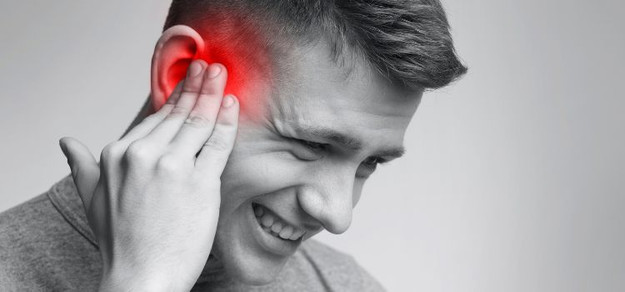
Ear pain isn’t always caused by an infection. Sometimes, it comes from grinding or clenching your teeth. The jaw joint is very close to the ear, so pressure from teeth grinding can spread and cause ear discomfort or ringing.
This article explains how teeth grinding leads to ear pain and what you can do to relieve it.
How Are Your Teeth and Ears Connected?

Your jaw joint, called the temporomandibular joint (TMJ), is located just in front of your ears. It connects your lower jaw to your skull and helps you talk, chew, and yawn.
When you grind or clench your teeth, the muscles and ligaments around this joint tighten. Because the TMJ is so close to the ear, that tension and pressure can easily spread, making your ears feel sore, full, or achy.
Note: In short, problems in your jaw can often feel like problems in your ears — even when your ears are perfectly healthy.
Why Teeth Grinding Can Lead to Ear Pain
When you grind or clench your teeth, your jaw muscles work overtime. This extra pressure can strain the TMJ, causing soreness that spreads to the ears. Over time, the constant force can also inflame the joint, leading to pain, tightness, or a feeling of pressure in or around the ear.
Nighttime grinding often makes this worse because it happens for hours without you noticing. You might wake up with jaw pain, a headache, or ear discomfort without realizing you’ve been clenching all night.
According to research, bruxism causes sustained muscle tension that affects both the jaw and nearby structures like the ears and temples. Nighttime grinding often makes this worse because it happens for hours without you noticing.
Note: Even though the pain feels like it’s coming from your ear, the real source is usually muscle tension and joint stress from grinding.
Related Articles:
Bruxism vs. Ear Infection — How to Tell the Difference
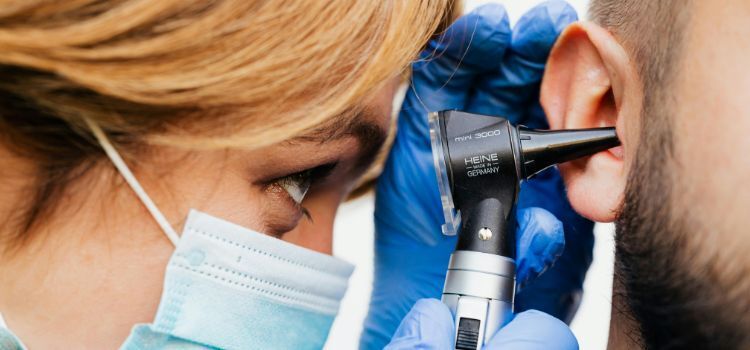
Ear pain from grinding often feels similar to an ear infection, but there are key differences.
- Ear infection: Usually comes with fever, fluid, or hearing changes. The pain may worsen when you swallow or lie down.
- Teeth grinding (bruxism): You’ll notice jaw tightness, headaches when you wake up, or sore teeth. The pain may feel deeper or spread from your jaw to your ear.
Pro tip: If your ear pain doesn’t come with cold or infection symptoms, it’s worth checking with a dentist. They can tell if your jaw and teeth are causing the discomfort.
Other Symptoms That May Accompany Ear Pain from Grinding
Ear pain from teeth grinding rarely comes alone. You might also notice:
- Jaw soreness or tightness, especially after waking up
- Headaches or pain around the temples
- Clicking or popping sounds when you open your mouth
- Tooth sensitivity or worn-down teeth
- Tension in the neck or face
- Ringing in the ears (tinnitus)
A 2024 Mayo Clinic review notes that long-term grinding can also wear down enamel and contribute to TMJ-related pain that radiates toward the ear.
Note: These symptoms all point to overworked jaw muscles and pressure on the TMJ, both common effects of teeth grinding.
How to Relieve Ear Pain Caused by Teeth Grinding
Relax Your Jaw
Apply a warm compress or gently massage your jaw muscles to ease tension and improve blood flow.
Manage Stress
Grinding often happens when you’re stressed. Try deep breathing, stretching, or short relaxation breaks throughout the day.
Avoid Hard or Chewy Foods
Let your jaw rest by skipping foods that require a lot of chewing until the pain improves.
Maintain Good Posture
Keep your head and neck aligned when sitting or looking at screens to reduce strain on your jaw joint.
Wear a Night Guard
A custom-fit night guard protects your teeth and reduces jaw pressure while you sleep. It cushions your bite and helps prevent further damage.
Pro tip: If the pain doesn’t go away, see your dentist. They can check for signs of grinding and recommend a night guard that fits your mouth comfortably.
Related Articles:
- The Right Night Guard Thickness for Bruxism
- How to Get Used to Wearing a Night Guard
- Night Guard Before and After
- Most Popular
- Hard Outside, Soft Inside
- 2MM Thick
- Moderate / Heavy
- Most Durable
- Hard Materials
- 1.5MM Thick
- Heavy / Severe
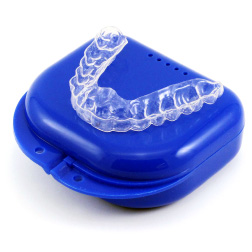
- For Day Time Use
- Thin, Barely Visible
- 1MM Thick
- Light / Moderate
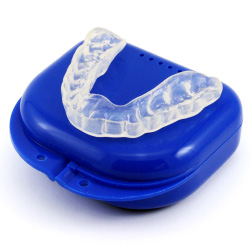
- For Clenching
- Flexible & Soft
- 1.5MM Thick
- Light / Moderate
When to See a Dentist or Doctor
See a dentist or doctor if your ear pain lasts for more than a few days or keeps coming back. You should also get checked if you notice:
- Jaw locking or clicking
- Trouble opening or closing your mouth
- Constant headaches or pressure near your ears
- Worn or cracked teeth
Note: A dentist can tell if teeth grinding is the cause and may suggest a custom night guard to reduce pressure on your jaw. In some cases, they might refer you to a TMJ specialist for further care.
Protecting Your Teeth and Ears — The Bottom Line
Teeth grinding can cause ear pain because the jaw joint sits right next to the ear. The pressure and tension from clenching can make your ears ache even when they’re perfectly healthy.
The best way to relieve this pain is to protect your teeth and relax your jaw. A custom night guard is one of the most effective ways to do both.
If you think grinding might be causing your ear pain, talk to your dentist or explore Pro Teeth Guard’s custom-fit night guards. They’re made to fit your mouth comfortably and help you wake up without pain or pressure.
References
- Alomar, X., Medrano, J., & Cabratosa, J. (2007). Anatomy of the temporomandibular joint. Seminars in Ultrasound, CT & MRI, 28(3), 170-183. https://doi.org/10.1053/j.sult.2007.02.002
- Lal, S. J., Sankari, A., & Weber, K. K. (2024, May 1). Bruxism management. In StatPearls [Internet]. StatPearls Publishing. Retrieved [insert retrieval date], from https://www.ncbi.nlm.nih.gov/books/NBK482466/
- Mayo Clinic Staff. (2024, December 27). Teeth grinding (bruxism) – Symptoms and causes. Mayo Clinic. Retrieved [insert retrieval date], from https://www.mayoclinic.org/diseases-conditions/bruxism/symptoms-causes/syc-20356095
- Most Popular
- Hard Outside, Soft Inside
- 2MM Thick
- Moderate / Heavy
- Most Durable
- Hard Materials
- 1.5MM Thick
- Heavy / Severe
- For Day Time Use
- Thin, Barely Visible
- 1MM Thick
- Light / Moderate
- For Clenching
- Flexible & Soft
- 1.5MM Thick
- Light / Moderate