Can Teeth Grow Back?
8th May 2026
Losing or damaging a tooth can be alarming. You might wonder — can teeth grow back on their own?
The short answer: no, adult teeth can’t naturally grow back once lost. But new dental research offers hope for the future, and there are several reliable ways to restore and protect your smile today.
In this guide, you’ll learn why teeth don’t regrow, what current science says about regeneration, and what options you have right now to keep your smile healthy.
Can Teeth Grow Back Naturally?

Some animals, like sharks and alligators, can regrow teeth throughout their lives. Humans, however, can’t. The reason lies in genetics: we only activate tooth-forming genes twice (for baby and adult sets).
Despite myths online, no toothpaste, supplement, or natural remedy can regrow a lost tooth. Strengthening enamel through good hygiene and fluoride helps protect what you have, but it won’t produce a new tooth.
Note: That said, science is getting closer to understanding how to stimulate tooth regeneration and researchers are studying how to make it happen.
Related Articles:
- Dental Hygiene and Teeth Health Tips and Resources
- Dental Health Tips for Parents
- Best Vitamins for Strong Teeth and Healthy Gums
Current & Emerging Tooth Regrowth Research
Dentists and scientists are exploring ways to help the body regrow teeth using stem cells, growth proteins, and tissue engineering.
- Stem cell studies have shown potential in forming new dentin and pulp tissue.
- A 2024 study from Japan found that blocking a protein called USAG-1 helped mice regrow missing teeth — a discovery that could one day help humans too.
- Researchers are also studying biodegradable scaffolds that guide stem cells to rebuild tooth structure.
Note: While this research is promising, experts agree that tooth regrowth in humans is still years away. Until then, dental restoration and protection remain the best solutions.
Understanding Tooth Growth: Baby Teeth vs. Permanent Teeth
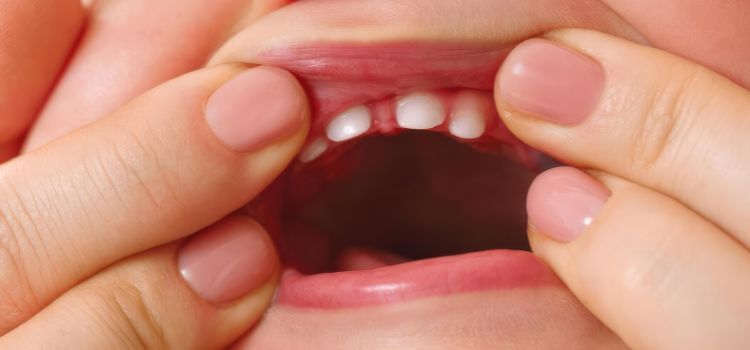
Humans grow two sets of teeth in a lifetime. The first set, called baby teeth (or primary teeth), appear in childhood and fall out naturally. These are replaced by permanent teeth, which are designed to last a lifetime.
Once your adult teeth come in, the body stops producing the specific cells that trigger new tooth growth. That’s why when an adult tooth is lost, from decay, injury, or grinding, there’s no natural regrowth process.
Note: baby teeth are temporary, but adult teeth are one-time only. That’s what makes prevention and protection so important.
What Happens When You Lose or Damage a Tooth
Each tooth is made up of three main layers:
- Enamel — the hard, outer protective shell.
- Dentin — a softer layer beneath the enamel.
- Pulp — the inner part containing nerves and blood vessels.
When a tooth is chipped or cracked, the enamel can’t regrow. Small mineral repairs may occur (called remineralization), but once enamel is gone, it’s gone for good.
Note: If the entire tooth falls out, the root connection to the jawbone is also lost, meaning no natural regrowth is possible. Over time, missing teeth can even lead to bone loss in the jaw and shifting of nearby teeth.
Related Articles:
- Worn Down Teeth Causes and Treatment
- Exposed Dentin: Causes and Treatment
- Protect Your Teeth and Gums with These Oral Health Tips and Resources
What You Can Do Now: Real Treatment Options
If a tooth is lost or damaged, modern dentistry offers several proven solutions:
1. Dental Implants
A titanium post replaces the root and supports a realistic crown. It looks, feels, and functions like a natural tooth.
2. Dental Bridges
A bridge uses surrounding teeth as anchors to fill the gap left by a missing tooth.
3. Partial or Full Dentures
Removable replacements that restore both function and appearance.
4. Bonding or Veneers
For chipped teeth, bonding or veneers can restore shape and protect exposed enamel.
Along with these treatments, focus on prevention and protection:
- Brush and floss daily.
- Limit acidic foods and sugary drinks.
- Visit your dentist regularly.
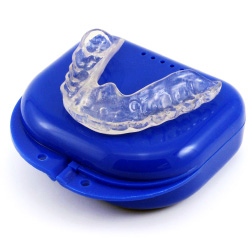
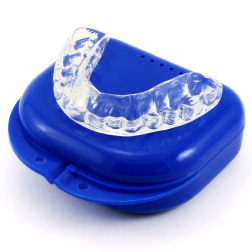
- Use a custom-fit night guard if you grind your teeth at night.
- Most Popular
- Hard Outside, Soft Inside
- 2MM Thick
- Moderate / Heavy
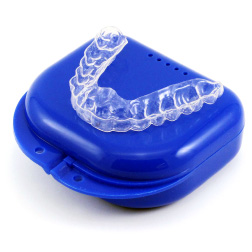
- Most Durable
- Hard Materials
- 1.5MM Thick
- Heavy / Severe
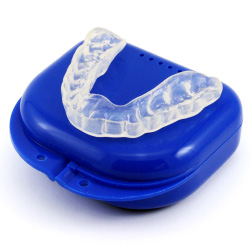
- For Day Time Use
- Thin, Barely Visible
- 1MM Thick
- Light / Moderate
- For Clenching
- Flexible & Soft
- 1.5MM Thick
- Light / Moderate
Future Outlook: The Possibility of Tooth Regeneration
Regenerative dentistry is one of the most exciting fields in modern medicine. Early trials are testing ways to stimulate tooth bud regrowth using a patient’s own stem cells.
Scientists hope these treatments could one day make tooth implants unnecessary. However, experts caution that human applications are likely still a decade or more away.
Note: For now, focusing on preserving your current teeth remains the most effective approach through good oral care and bruxism protection.
Frequently Asked Questions
1. Can adult teeth grow back after falling out?
No. Once a permanent tooth falls out, it won’t grow back. You’ll need a dental replacement like an implant or bridge.
2. Can a chipped tooth heal itself?
Minor enamel cracks can be smoothed or repaired with bonding, but they won’t naturally regrow.
3. Does enamel regrow after damage?
No. Enamel can remineralize slightly, but full regrowth isn’t possible.
4. Will science ever make teeth regrow?
Possibly. Early animal studies are promising, but human treatments are still in development.
Conclusion
While adult teeth don’t grow back naturally, scientific advances are paving the way for future regeneration. In the meantime, modern dentistry provides safe and lasting options for repair and replacement.
Your best strategy is prevention, care for your teeth, manage grinding, and protect them with a night guard if needed.
Keep your smile strong with a custom night guard from Pro Teeth Guard. Because you only get one set of adult teeth — make them last a lifetime.
References:
- Zhang, W., & Yelick, P. C. (2021). Tooth repair and regeneration: potential of dental stem cells. Trends in Molecular Medicine, 27(5), 501-511. https://doi.org/10.1016/j.molmed.2021.02.005
- Li, X.-L., Fan, W., & Fan, B. (2024). Dental pulp regeneration strategies: A review of status quo and recent advances. Bioactive Materials, 38, 258–275. https://doi.org/10.1016/j.bioactmat.2024.04.031
- Murashima-Suginami, A., Kiso, H., Tokita, Y., Mihara, E., Nambu, Y., Uozumi, R., Tabata, Y., Bessho, K., Takagi, J., Sugai, M., & Takahashi, K. (2021). Anti–USAG-1 therapy for tooth regeneration through enhanced BMP signaling. Science Advances, 7(7), eabf1798. https://doi.org/10.1126/sciadv.abf1798
- WebMD Editorial Contributors. (2025). What to know about remineralizing teeth. WebMD. Retrieved [insert retrieval date], from https://www.webmd.com/oral-health/remineralizing-teeth
- Thalakiriyawa, D. S., & Dissanayaka, W. L. (2024). Advances in regenerative dentistry approaches: An update. International Dental Journal, 74(1), 25-34. https://doi.org/10.1016/j.identj.2023.07.008
- Morgan, C. (2025, April 29). Amazing animals with regenerating teeth. A-Z Animals. Retrieved [insert retrieval date], from https://www.a-z-animals.com/slideshows/amazing-animals-with-regenerating-teeth/
- Most Popular
- Hard Outside, Soft Inside
- 2MM Thick
- Moderate / Heavy
- Most Durable
- Hard Materials
- 1.5MM Thick
- Heavy / Severe
- For Day Time Use
- Thin, Barely Visible
- 1MM Thick
- Light / Moderate
- For Clenching
- Flexible & Soft
- 1.5MM Thick
- Light / Moderate