Essix Retainer
29th May 2026
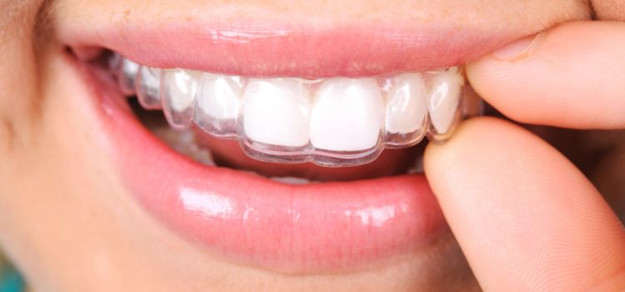
If you have just finished braces or Invisalign, your orthodontist probably recommended wearing a retainer. That is because even after your teeth are straightened, they can gradually shift back to their old positions.
One of the most common options is the Essix retainer, a clear, custom-made tray that fits closely over your teeth. It is simple, comfortable, and nearly invisible.
This guide explains what an Essix retainer is, how it works, how it compares to other types of retainers, and how to care for it so it lasts as long as possible.
What Is an Essix Retainer and How Does It Work?
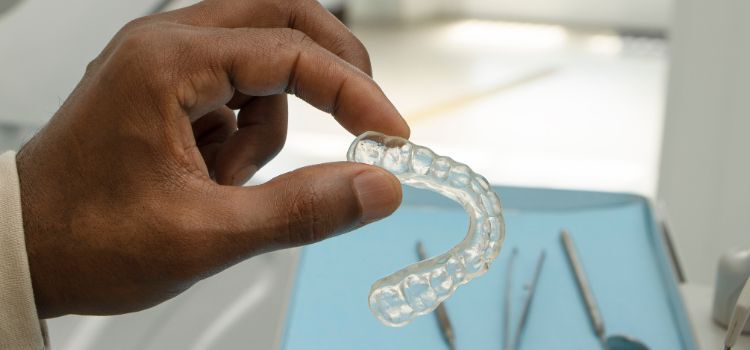
An Essix retainer (sometimes misspelled “Essex retainer”) is a clear plastic retainer made from thin, durable thermoplastic. It’s designed to hold your teeth in place after orthodontic treatment, preventing them from shifting.
Each retainer is custom-made from a mold or digital scan of your mouth, so it fits perfectly and feels comfortable to wear. You simply pop it in and out as needed, no wires, no metal, and no complicated adjustments.
Essix retainers belong to a category called vacuum-formed retainers. These retainers are widely used in orthodontics to maintain tooth alignment after treatment. Research shows that vacuum-formed retainers can effectively maintain tooth position and prevent relapse after braces.
Studies comparing vacuum-formed retainers and traditional Hawley retainers have found that both types can successfully maintain orthodontic results, with no major differences in overall stability in many cases.
Note: Because of their clear design and comfortable fit, Essix retainers are also highly accepted by patients and often preferred for everyday wear.
Essix Retainer vs. Other Types of Retainers
When it comes to keeping your teeth straight, there are a few types of retainers, and each has its pros and cons. Let’s see how the Essix retainer compares to the others.
Essix vs. Hawley Retainer
Hawley retainer is the traditional type with a metal wire that goes across your front teeth and a plastic piece that rests on the roof of your mouth. It’s durable and can last for years, but it’s more noticeable and can feel bulky at first. Some people also find it affects their speech slightly.
An Essix retainer, on the other hand, is made from clear plastic that fits snugly over your teeth like a thin mouthguard. It’s lightweight, almost invisible, and comfortable to wear. You can talk normally and easily remove it for meals or cleaning.
Note: If you want something discreet and simple to maintain, an Essix retainer is usually the better choice. But if you prefer a sturdier option that can last longer and don’t mind visible wires, a Hawley retainer might suit you more.
Essix vs. Fixed (Bonded) Retainer
A fixed retainer is a thin wire that’s permanently glued behind your teeth, usually on the lower front teeth, to keep them from moving. It’s great for people who don’t want to remember taking their retainer in and out every day.
However, fixed retainers can be harder to clean since food and plaque can build up around the wire. They also require extra care when flossing.
With an Essix retainer, you get flexibility. You can remove it anytime, brush and floss normally, and easily replace it if it gets damaged.
Note: Some orthodontists even recommend using both, a fixed retainer for constant support and an Essix for nighttime wear.
Related Articles:
- Types Of Retainers For Teeth
- Retainer vs Night Guard for Teeth Grinding
- Cracked Retainer From Grinding
Common Problems and How to Fix Them
Even with great care, Essix retainers can face a few common issues. Here’s how to handle them:
1. My retainer cracked or split.
This happens over time due to wear and tear. If it’s cracked, avoid using it, it may not hold your teeth properly. Order a replacement as soon as possible.
2. My retainer feels tight or doesn’t fit anymore.
Teeth can shift quickly if you stop wearing your retainer. Try wearing it for short periods, but if it still doesn’t fit, get a new one made to match your current alignment.
3. My retainer turned cloudy.
This is often due to plaque or toothpaste scratches. Soak it in a gentle retainer cleaner and brush softly. For stubborn cloudiness, it’s best to replace it.
4. My retainer smells or tastes bad.
That’s a sign it needs a deep clean. Use mild soap or a specialized retainer cleaner daily, never hot water or bleach.
Pro Tip: If you grind your teeth, mention it when ordering. You might benefit more from a night guard, which is thicker and built for grinding protection.
How Long Does an Essix Retainer Last?
On average, an Essix retainer lasts six months to two years, depending on how well you care for it. The clear plastic can wear down over time, especially if you grind your teeth or forget to store it properly.
You’ll know it’s time for a replacement if:
- It develops small cracks or splits.
- It feels loose or doesn’t fit right anymore.
- It looks cloudy or discolored even after cleaning.
Pro Tip: Avoid hot water, harsh cleaners, and leaving your retainer in the sun. Heat and bending can change its shape.
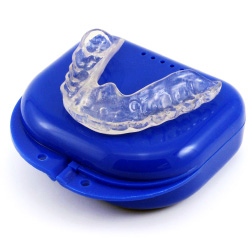
- Most Popular
- Hard Outside, Soft Inside
- 2MM Thick
- Moderate / Heavy
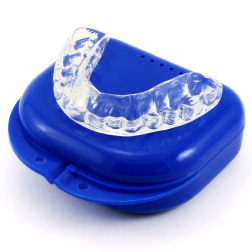
- Most Durable
- Hard Materials
- 1.5MM Thick
- Heavy / Severe
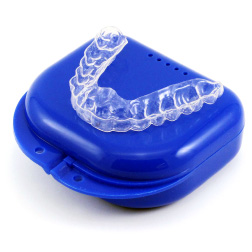
- For Day Time Use
- Thin, Barely Visible
- 1MM Thick
- Light / Moderate
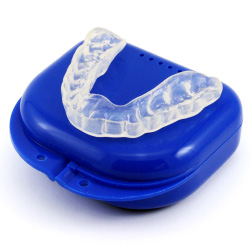
- For Clenching
- Flexible & Soft
- 1.5MM Thick
- Light / Moderate
How to Clean and Care for Your Essix Retainer
Keeping your Essix retainer clean helps it last longer and stay clear. Here’s how:
Daily Care Routine
- Rinse it with cool water each time you take it out.
- Brush it gently with a soft toothbrush, skip the toothpaste, as it can scratch the plastic.
- Use a mild retainer cleaner or gentle soap once a day.
- Store it safely in its case when not in use, never wrap it in tissue or napkin.
What to Avoid
- Hot water or sunlight (they can warp the plastic).
- Toothpaste or harsh cleaners.
- Eating or drinking anything except water while wearing it.
A few minutes of care every day will keep your retainer fresh, clear, and comfortable, and save you from needing replacements too soon.
Why Dentists Recommend Essix Retainers
Essix retainers are loved by both dentists and patients because they’re:
Comfortable: Smooth and gentle on your gums — no wires poking your cheeks.
Discreet: Virtually invisible when worn.
Affordable: Usually less expensive to replace than other types of retainers.
Convenient: Easy to remove for eating, brushing, and cleaning.
Note: They’re especially popular for people who want a low-maintenance option to keep their teeth straight without the hassle of bulky or visible retainers.
FAQs About Essix Retainers
How often should I wear my Essix retainer?
Most orthodontists recommend wearing it full-time for the first few months, then at night only once your teeth are stable.
Can I eat or drink while wearing it?
No, remove your retainer before eating or drinking anything except water to avoid warping or staining.
How do I know when to replace my Essix retainer?
If it becomes loose, cracked, or cloudy, it’s time for a replacement.
Where can I get a replacement Essix retainer?
Visit your dentist or orthodontist for a professionally made replacement. They can ensure the fit is accurate and comfortable.
Can an Essix retainer protect against teeth grinding?
No, Essix retainers are for keeping teeth aligned, not for preventing damage from grinding. For that, you’ll need a custom night guard, which you can order from Pro Teeth Guard.
Final Thoughts
An Essix retainer is a simple, comfortable, and nearly invisible way to keep your teeth aligned after orthodontic treatment. With proper cleaning and care, it can last for years.
References:
- Ramazanzadeh, B., Ahrari, F., & Hosseini, Z.-S. (2018). The retention characteristics of Hawley and vacuum-formed retainers with different retention protocols. Journal of Clinical and Experimental Dentistry, 10(3), e224–e231. https://doi.org/10.4317/jced.54511
- Vaida, L. L., Bud, E. S., Halitchi, L. G., Cavalu, S., Todor, B. I., Negrutiu, B. M., Moca, A. E., & Bodog, F. D. (2020). The behavior of two types of upper removable retainers—Our clinical experience. Children, 7(12), 295. https://doi.org/10.3390/children7120295
- Saleh, M., Hajeer, M. Y., & Muessig, D. (2017). Acceptability comparison between Hawley retainers and vacuum-formed retainers in orthodontic adult patients: A single-centre, randomized controlled trial. European Journal of Orthodontics, 39(4), 453–461. https://doi.org/10.1093/ejo/cjx016
- Most Popular
- Hard Outside, Soft Inside
- 2MM Thick
- Moderate / Heavy
- Most Durable
- Hard Materials
- 1.5MM Thick
- Heavy / Severe
- For Day Time Use
- Thin, Barely Visible
- 1MM Thick
- Light / Moderate
- For Clenching
- Flexible & Soft
- 1.5MM Thick
- Light / Moderate