How Should Your Tongue Rest
13th Mar 2026
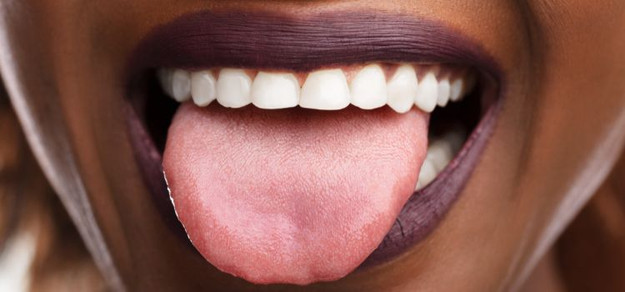
Have you ever wondered where your tongue should rest when you’re not talking or eating? Tongue posture plays a key role in oral health, breathing, and teeth alignment. Resting the tongue in the wrong spot, like the bottom of the mouth, can lead to mouth breathing, teeth grinding, or jaw discomfort.
The good news: proper tongue posture is simple to learn. This guide explains the correct resting position, why it matters, and how to train your tongue into the right habit.
Why Tongue Resting Position Matters

The way your tongue rests affects more than you might think. A proper resting position helps keep your teeth and jaw aligned, supports healthy breathing, and reduces strain on the muscles in your face and neck.
When the tongue rests too low in the mouth, it can cause:
- Mouth breathing, which may dry out your mouth and increase the risk of cavities.
- Extra pressure on teeth, leading to shifting or misalignment.
- Jaw tension or discomfort over time.
- Snoring or airway issues during sleep.
Note: Good tongue posture supports your overall oral health and can even make breathing feel easier.
Related Articles:
The Correct Tongue Resting Position (Step by Step)
Here’s how your tongue should naturally rest, simple, clear, and easy to check:
Tip of the tongue
Lightly touch it to the roof of your mouth, just behind your upper front teeth. Research in PMC shows that resting the tongue too low can affect jaw development and airway health.
Body of the tongue
Gently press it against the hard palate (the roof of your mouth), not lying flat at the bottom. Healthline explains that this position supports nasal breathing and reduces strain on the jaw.
Teeth
Keep them slightly apart or just lightly touching—not clenched. As Colgate notes, relaxed teeth and jaw help prevent unnecessary pressure and tension.
Lips
Hold them closed comfortably, without straining. A relaxed lip seal is an important sign of healthy oral posture.
Suction
Ideally, the tongue should feel gently “suctioned” to the roof of the mouth, creating a natural hold without muscle effort. Experts at Oral Posture emphasize that this helps the tongue stay in place and supports healthy jaw alignment.
Note: Think of it like this: the tongue is anchored to the roof of your mouth, your lips are softly closed, and your teeth are relaxed. That’s proper tongue posture.
Signs of Poor Tongue Posture
If your tongue isn’t resting where it should, your body will often show signs. Recognizing them early can help you fix the habit before it causes bigger issues.
Tongue rests at the bottom of the mouth
A low tongue posture can affect breathing and jaw alignment.
Mouth breathing
Relying on the mouth instead of the nose to breathe often signals poor tongue placement.
Jaw pain or tension
Improper tongue posture can strain the jaw muscles and lead to discomfort.
Crooked teeth or narrow palate
Over time, low tongue posture may contribute to shifting teeth or a narrow palate.
Teeth grinding or clenching
Poor tongue placement is sometimes linked to nighttime grinding or clenching.
Note: Noticing one or more of these signs doesn’t mean something is seriously wrong—it just means your tongue posture may need a little adjustment.
Health Benefits of Correct Tongue Posture

Resting your tongue in the right place isn’t just a small habit—it supports your overall health in many ways.
Better breathing
Proper tongue posture encourages nasal breathing, which keeps your airways clear and reduces dry mouth.
Improved jaw alignment
A tongue that rests on the roof of the mouth helps balance pressure on the jaw and may ease tension.
Healthier teeth
Correct posture supports even spacing of teeth and helps prevent shifting or crowding.
Reduced teeth grinding
A stable tongue position can lower the risk of nighttime clenching or grinding.
Less snoring
By supporting the airway, proper posture may help reduce snoring and improve sleep quality.
Note: These benefits add up over time, making tongue posture an easy but powerful way to improve your oral health and comfort.
Related Articles:
- How to Get Used to Wearing a Night Guard
- How Should a Night Guard Fit?
- Guide to Choosing the Right Night Guard
How to Train Your Tongue to Rest Properly
Changing tongue posture takes practice, but with simple daily habits you can train your tongue to rest in the right spot.
Spot the spot
Place the tip of your tongue just behind your upper front teeth. Hold it there gently to get used to the correct position.
Press to the roof
Flatten the rest of your tongue against the roof of your mouth. Aim for light suction without straining.
Breathe through your nose
Practice keeping your lips closed and breathing through your nose while your tongue stays in place.
Check in often
Set reminders or pause during the day to notice where your tongue is resting. The more consistent you are, the quicker it becomes natural.
Try myofunctional therapy
If tongue posture feels difficult, a specialist can guide you with targeted exercises to strengthen the right muscles.
Note: With regular practice, proper tongue posture will start to feel natural. Think of it as training a small habit that pays off with long-term benefits for your teeth, jaw, and breathing.
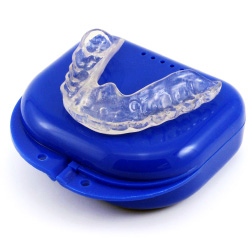
- Most Popular
- Hard Outside, Soft Inside
- 2MM Thick
- Moderate / Heavy
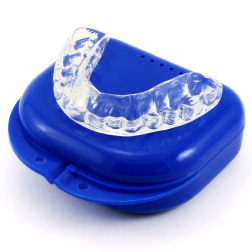
- Most Durable
- Hard Materials
- 1.5MM Thick
- Heavy / Severe
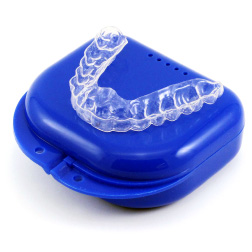
- For Day Time Use
- Thin, Barely Visible
- 1MM Thick
- Light / Moderate
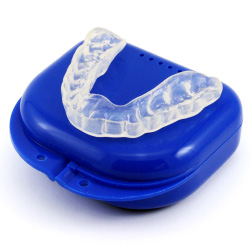
- For Clenching
- Flexible & Soft
- 1.5MM Thick
- Light / Moderate
Frequently Asked Questions About Tongue Posture
Should your tongue rest on the roof of your mouth?
Yes. Your tongue should rest gently on the roof of your mouth with the tip just behind your upper front teeth. This supports proper breathing and jaw alignment.
Is it bad if my tongue rests at the bottom of my mouth?
Yes, resting your tongue at the bottom of your mouth can lead to mouth breathing, jaw tension, and even teeth misalignment over time.
Can tongue posture affect breathing and snoring?
Yes. Proper tongue posture promotes nasal breathing and keeps the airway open, which may help reduce snoring.
Does tongue posture help with teeth grinding?
Good tongue posture may reduce the pressure that leads to grinding, but it doesn’t stop it completely. A custom-fit night guard can help protect your teeth while you work on improving posture.
How long does it take to fix tongue posture?
It varies. With daily awareness and exercises, many people start noticing improvements in a few weeks, but building a lasting habit can take several months.
Conclusion
Tongue posture might not be something you think about often, but it can make a big difference for your teeth, jaw, and breathing. Training your tongue to rest on the roof of your mouth is a small habit that supports long-term oral health.
If you’re also dealing with teeth grinding while you work on better posture, a custom night guard can help protect your smile. At Pro Teeth Guard, our dentist-quality night guards are made to fit comfortably and keep your teeth safe, at a fraction of the cost of a dental office.
References:
- Kravanja, S. L., Hocevar-Boltezar, I., Marolt Music, M., Jarc, A., Verdenik, I., & Ovsenik, M. (2018, September 11). Three-dimensional ultrasound evaluation of tongue posture and its impact on articulation disorders in preschool children with anterior open bite. Radiology and Oncology, 52(3), 250–256. https://doi.org/10.2478/raon-2018-0032
- Sutton, J. (2019, July 17). What you need to know about proper tongue posture. Healthline. Retrieved [insert retrieval date], from https://www.healthline.com/health/tongue-posture
- Oral Care Center. (2023, January 9). What is proper tongue posture and why does it matter? Colgate. Retrieved [insert retrieval date], from https://www.colgate.com/en-us/oral-health/threats-to-dental-health/what-is-proper-tongue-posture-and-why-does-it-matter
- Oral Posture. (n.d.). Comprehensive and holistic breathing and orofacial myofunctional therapy. Retrieved [insert retrieval date], from https://www.oralposture.com/what-is-myofunctional-therapy
- Most Popular
- Hard Outside, Soft Inside
- 2MM Thick
- Moderate / Heavy
- Most Durable
- Hard Materials
- 1.5MM Thick
- Heavy / Severe
- For Day Time Use
- Thin, Barely Visible
- 1MM Thick
- Light / Moderate
- For Clenching
- Flexible & Soft
- 1.5MM Thick
- Light / Moderate