Lexapro and Bruxism
24th Jan 2026
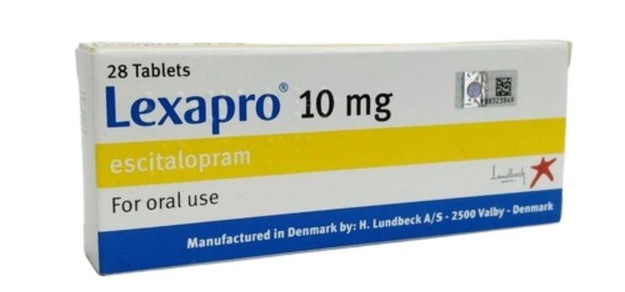
If you’ve started taking Lexapro and noticed jaw clenching or teeth grinding, you’re not alone.
Some people who take this antidepressant experience bruxism, or involuntary teeth grinding and jaw tension.
The good news: it can be managed. This article explains why Lexapro may cause bruxism, what signs to look for, and how to relieve it while protecting your teeth.
Can Lexapro Cause Bruxism?
Yes. Lexapro (escitalopram) and other SSRIs have been linked to teeth grinding in clinical reports and reviews.
A 2018 systematic review summarized dozens of antidepressant-associated bruxism cases and described typical features and timing.
There are escitalopram-specific case reports showing new-onset bruxism after starting the medication, including recent documentation with detailed clinical follow-up.
The proposed mechanism involves changes in serotonin and dopamine pathways that influence jaw muscle activity; newer neurobiological reviews also point to dopamine receptor changes in bruxism.
Onset often appears within the first few weeks after starting or increasing an antidepressant dose, and may be dose-related.
For clinicians, recent guidance on management notes options such as dose adjustment, switching medications, or adding agents like buspirone when appropriate.
Bottom line: Lexapro-related bruxism is uncommon but documented, likely tied to neurotransmitter effects, and usually improves with coordinated care from your doctor and dentist.
Related Articles:
- Antidepressants And Teeth Grinding
- Medications That Cause Bruxism
- How To Relieve Tooth Pain From Grinding?
What Is Bruxism?
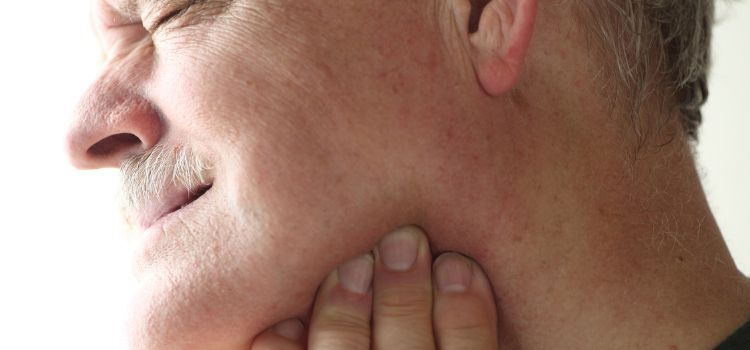
Bruxism means grinding or clenching your teeth without realizing it. It can happen while you’re awake or asleep. You might notice a tight or sore jaw, morning headaches, sensitive teeth, or clicking in your jaw joint. Mild cases may go unnoticed, but frequent grinding can wear down teeth and cause pain over time.
Pro Tip: A dentist can confirm if you have bruxism and suggest ways to protect your teeth.
Symptoms of Lexapro-Related Bruxism

Upon waking, you might notice jaw clenching, a tight or sore jaw, and morning headaches, all signs your jaw muscles were working overnight.
As grinding continues, teeth can become sensitive or look worn and flattened, and you may develop chipped teeth or cracked fillings from repeated force.
Discomfort can spread beyond the jaw: ear, temple, or facial pain is common, and the jaw joint may click or pop when you open or close your mouth. Some people also see scalloped tongue edges or cheek indentations from clenching.
Sleep can take a hit, too, restless nights are common, and a partner may hear grinding sounds or notice jaw tensing while you sleep.
- Most Popular
- Hard Outside, Soft Inside
- 2MM Thick
- Moderate / Heavy
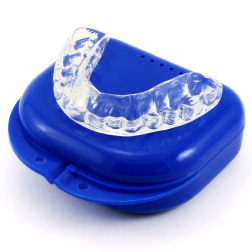
- Most Durable
- Hard Materials
- 1.5MM Thick
- Heavy / Severe
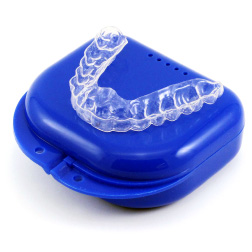
- For Day Time Use
- Thin, Barely Visible
- 1MM Thick
- Light / Moderate
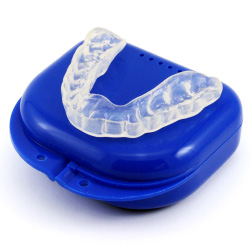
- For Clenching
- Flexible & Soft
- 1.5MM Thick
- Light / Moderate
Treatment and Relief Options
Start with your prescriber. If grinding began after starting or changing Lexapro, ask about safe options: a lower dose, different timing, a switch to another medicine, or (in some cases) an add-on like buspirone. Don’t change medication on your own.
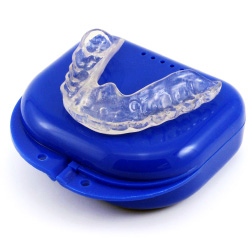
Protect your teeth right away with a custom night guard. It cushions your bite, eases jaw strain, and prevents chips and wear while you and your prescriber address the cause.
Lower daily tension with simple habits:
- Gentle jaw stretches and warm compresses
- Tongue-to-roof-of-mouth rest posture
- Short breathing breaks during work or study
Tweak lifestyle triggers that can worsen grinding:
- Cut back on caffeine, alcohol, and nicotine, especially in the evening
- Keep a steady sleep schedule and a dark, cool bedroom
- Avoid screens for an hour before bed
Pro Tip: Stay in touch with your dentist. Ask for monitoring of tooth wear and jaw function; early changes are easier to manage. Bring a symptom log, note when grinding happens, any dose changes, and what helps, so your doctor and dentist can fine-tune your plan.
Related Articles:
- Guide to Choosing the Right Night Guard
- How to Relax Your Jaw When Sleeping
- Does Caffeine Cause Bruxism?
When to Talk to Your Doctor or Dentist
Start with your prescriber, don’t stop Lexapro on your own! If grinding starts or worsens, ask about safe options such as a dose change, different timing, switching antidepressants, or (in some cases) adding buspirone.
Loop in your dentist for a bruxism check; they can spot tooth wear and jaw strain and may recommend a custom-fit night guard to protect your teeth while you adjust the medication plan.
Seek care sooner if symptoms are severe, including jaw locking or trouble opening and closing, cracked or chipped teeth, strong morning headaches, or chewing pain.
Keep a simple log noting when symptoms began and how often they occur, any dose or medication changes, and whether it’s worse at night or during the day, and bring this to your appointments.
FAQs
When does Lexapro-related bruxism start?
Typically within the first few weeks of starting Lexapro or after a dose increase.
How do I stop teeth grinding on Lexapro?
Work with your prescriber on dose changes or a medication switch, and use a custom night guard to protect teeth. Reduce stress, caffeine, and alcohol, and improve sleep.
Will Lexapro bruxism go away?
Often improves in a few weeks; if not, ask about medication adjustments or add-on treatments (e.g., buspirone, if prescribed).
Is it safe to stop Lexapro because of bruxism?
No. Do not stop on your own. Consult your prescriber for safe changes.
Conclusion
Lexapro can cause teeth grinding for some people, but it can be managed. Talk to your prescriber about safe changes to your medication, see your dentist to check for wear, and use a custom night guard to protect your teeth.
Get help fast if you have jaw locking, strong pain, or broken teeth. With the right plan, most people feel better and protect their smile.
References:
- Garrett, A. R., & Hawley, J. S. (2018). SSRI-associated bruxism: A systematic review of published case reports. Neurology: Clinical Practice, 8(2), 135–141. https://doi.org/10.1212/CPJ.0000000000000433
- Albrahim, S., Albobali, Y., & Elzain, M. (2020). A challenging case of sertraline-induced bruxism. Journal of Medical Case Reports and Case Series. https://doi.org/10.38207/jmcrcs20201036
- Mukherjee, S., Sen, S., Biswas, A., Chatterjee, S. S., & Tripathi, S. K. (2014). Escitalopram induced bruxism: A case report. Scholars Journal of Applied Medical Sciences, 2(3D), 1162–1163. https://doi.org/10.36347/sjams.2014.v02i03.061
- Teoh, L., Moses, G., Duma, S. R., & Fung, V. S. C. (2019, August 1). Drug-induced bruxism. Australian Prescriber, 42, 121. https://doi.org/10.18773/austprescr.2019.048
- Gupta, R., & Scott, K. (2023). Management of antidepressant-induced bruxism. Journal of Clinical Psychopharmacology, 43(5), 562-569. https://doi.org/10.1097/JCP.0000000000001742
- Most Popular
- Hard Outside, Soft Inside
- 2MM Thick
- Moderate / Heavy
- Most Durable
- Hard Materials
- 1.5MM Thick
- Heavy / Severe
- For Day Time Use
- Thin, Barely Visible
- 1MM Thick
- Light / Moderate
- For Clenching
- Flexible & Soft
- 1.5MM Thick
- Light / Moderate